

L'Estudi General Lul·lià és hereu d'una tradició universitària que arrenca l'any 1314, quan a Palma es començà a ensenyar la doctrina del beat Ramon Llull. Al llarg de set segles, la institució ha viscut moments de creixement i esplendor, però també de decadència i destrucció, fins a la seva reconstrucció al segle XX com a centre de cultura i coneixement de Mallorca. Aquesta és, any rere any, la seva història.
S'inicia l'ensenyament de la doctrina de Ramon Llull al carrer del Call de Palma, gràcies al mecenatge de Beatriu de Pinós i Agnès de Pax.
El rei Ferran II d'Aragó funda els Estudis Generals, origen de la Reial i Pontifícia Universitat Literària i Lul·liana de Mallorca. S'hi imparteixen Teologia, Arts, Dret i Medicina.
Les escoles lul·lianes es traslladen a l'edifici del carrer de Sant Roc, adquirit pels Jurats del Regne de Mallorca.
La institució es converteix en Seminari d'Estudis, dependent de la Universitat de Cervera.
Desapareix definitivament el Seminari d'Estudis.
L'edifici acull la Societat Econòmica Mallorquina d'Amics del País, l'Institut Balear, l'Acadèmia Provincial de Belles Arts, l'Escola d'Arts i Oficis i la Comissió Provincial de Monuments, entre d'altres.
Un bombardeig durant la Guerra Civil destrueix gairebé completament l'edifici.
Es constitueix el Patronat de l'Estudi General Lul·lià per reconstruir l'edifici i recuperar la tradició universitària de Mallorca. L'arquitecte Gabriel Alomar redacta el projecte del nou edifici i comencen les obres.
El 12 de maig, la Universitat de Barcelona nomena el primer Consell Rector de l'Estudi General Lul·lià. S'inicien els cursos d'espanyol per a estrangers i es crea el Centre d'Ensenyament Universitari, amb estudis de Filosofia i Lletres i Dret adscrits a la Universitat de Barcelona.
Les obres del nou edifici s'aturen per manca de recursos.
Les obres es reprenen gràcies al suport de la Fundació Juan March.
Es crea l'Institut de Llengües Modernes, origen de l'ensenyament de la llengua catalana de Mallorca i d'idiomes estrangers.
El 18 d'octubre s'inauguren els estudis comuns de la Facultat de Filosofia i Lletres de la Universitat de Barcelona, precedent directe de l'actual Universitat de les Illes Balears.
Culminen les obres amb la construcció del saló d'actes, respectant les restes romanes descobertes durant les excavacions.
L'Estudi General Lul·lià manté una intensa activitat cultural i acadèmica, acollint nombroses institucions científiques, professionals i culturals, consolidant-se com un dels principals centres de difusió del coneixement i del patrimoni de les Illes Balears.
El Estudi General Lul·lià es heredero de una tradición universitaria que arranca en 1314, cuando en Palma se empezó a enseñar la doctrina del beato Ramon Llull. A lo largo de siete siglos, la institución ha vivido momentos de crecimiento y esplendor, pero también de decadencia y destrucción, hasta su reconstrucción en el siglo XX como centro de cultura y conocimiento de Mallorca. Esta es, año tras año, su historia.
Se inicia la enseñanza de la doctrina de Ramon Llull en la calle del Call de Palma, gracias al mecenazgo de Beatriu de Pinós y Agnès de Pax.
El rey Fernando II de Aragón funda los Estudios Generales, origen de la Real y Pontificia Universidad Literaria y Luliana de Mallorca. Se imparten Teología, Artes, Derecho y Medicina.
Las escuelas lulianas se trasladan al edificio de la calle de Sant Roc, adquirido por los Jurados del Reino de Mallorca.
La institución se convierte en Seminario de Estudios, dependiente de la Universidad de Cervera.
Desaparece definitivamente el Seminario de Estudios.
El edificio acoge la Sociedad Económica Mallorquina de Amigos del País, el Instituto Balear, la Academia Provincial de Bellas Artes, la Escuela de Artes y Oficios y la Comisión Provincial de Monumentos, entre otras.
Un bombardeo durante la Guerra Civil destruye casi por completo el edificio.
Se constituye el Patronato del Estudi General Lul·lià para reconstruir el edificio y recuperar la tradición universitaria de Mallorca. El arquitecto Gabriel Alomar redacta el proyecto del nuevo edificio y comienzan las obras.
El 12 de mayo, la Universidad de Barcelona nombra el primer Consejo Rector del Estudi General Lul·lià. Se inician los cursos de español para extranjeros y se crea el Centro de Enseñanza Universitaria, con estudios de Filosofía y Letras y Derecho adscritos a la Universidad de Barcelona.
Las obras del nuevo edificio se detienen por falta de recursos.
Las obras se reanudan gracias al apoyo de la Fundación Juan March.
Se crea el Instituto de Lenguas Modernas, origen de la enseñanza de la lengua catalana de Mallorca y de idiomas extranjeros.
El 18 de octubre se inauguran los estudios comunes de la Facultad de Filosofía y Letras de la Universidad de Barcelona, precedente directo de la actual Universitat de les Illes Balears.
Culminan las obras con la construcción del salón de actos, respetando los restos romanos descubiertos durante las excavaciones.
El Estudi General Lul·lià mantiene una intensa actividad cultural y académica, acogiendo numerosas instituciones científicas, profesionales y culturales, y se consolida como uno de los principales centros de difusión del conocimiento y del patrimonio de las Illes Balears.
The Estudi General Lul·lià is heir to a university tradition dating back to 1314, when the teaching of the doctrine of Blessed Ramon Llull began in Palma. Over seven centuries, the institution has lived through periods of growth and splendour, but also of decline and destruction, until its reconstruction in the 20th century as a centre of culture and knowledge in Mallorca. This is its history, year by year.
The teaching of Ramon Llull's doctrine begins on Carrer del Call in Palma, thanks to the patronage of Beatriu de Pinós and Agnès de Pax.
King Ferdinand II of Aragon founds the Estudis Generals, the origin of the Royal and Pontifical Literary and Lullian University of Mallorca. Theology, Arts, Law and Medicine are taught there.
The Lullian schools move to the building on Carrer de Sant Roc, acquired by the Jurats (magistrates) of the Kingdom of Mallorca.
The institution becomes a Seminary of Studies, under the University of Cervera.
The Seminary of Studies is permanently closed.
The building houses the Mallorcan Economic Society of Friends of the Country, the Balearic Institute, the Provincial Academy of Fine Arts, the School of Arts and Crafts and the Provincial Monuments Commission, among others.
A bombing raid during the Spanish Civil War almost completely destroys the building.
The Board of Trustees of the Estudi General Lul·lià is established to rebuild the building and restore Mallorca's university tradition. The architect Gabriel Alomar draws up the plans for the new building and construction begins.
On 12 May, the University of Barcelona appoints the first Governing Council of the Estudi General Lul·lià. Spanish courses for foreigners begin and the University Teaching Centre is created, offering Arts and Humanities and Law degrees attached to the University of Barcelona.
Work on the new building comes to a halt due to a lack of funds.
Work resumes thanks to the support of the Juan March Foundation.
The Institute of Modern Languages is founded, marking the beginning of the teaching of Catalan in Mallorca and of foreign languages.
On 18 October, the common courses of the Faculty of Arts and Humanities of the University of Barcelona are inaugurated, the direct forerunner of today's University of the Balearic Islands.
Construction is completed with the assembly hall, preserving the Roman remains discovered during the excavations.
The Estudi General Lul·lià maintains an intense cultural and academic life, hosting numerous scientific, professional and cultural institutions, and has become one of the leading centres for the dissemination of knowledge and heritage in the Balearic Islands.


Bombing during the Spanish Civil War in 1936 left the building in ruins. In 1950 a board of trustees was formed to rebuild it; alongside driving the recovery of the property, it drafted preliminary statutes under which the Estudi General Lul·lià was to stand as an exponent of the culture of the Islands and to promote the restoration of university teaching in Mallorca.
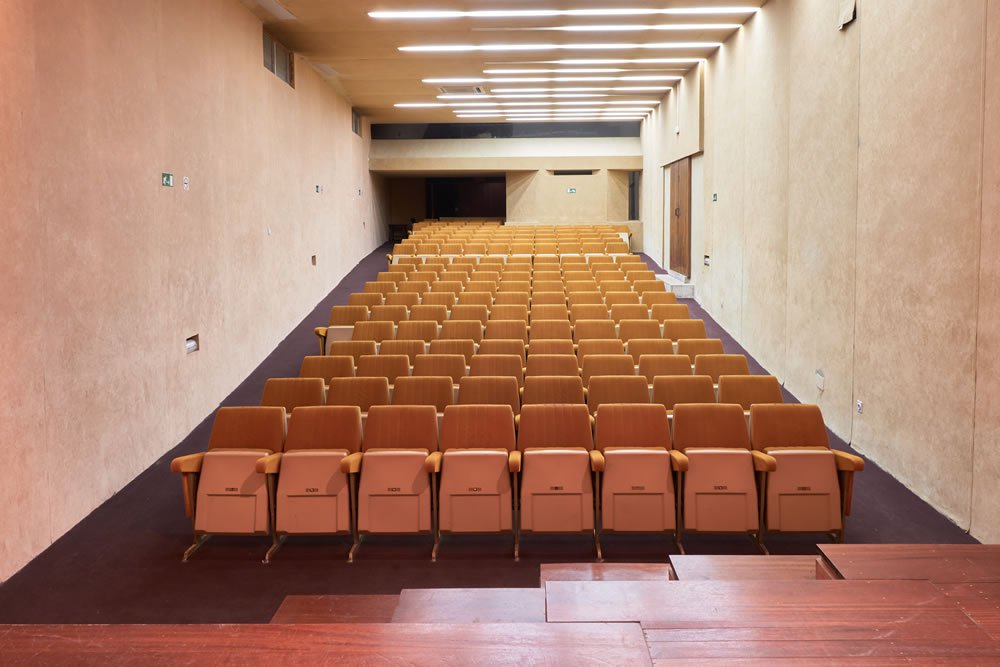
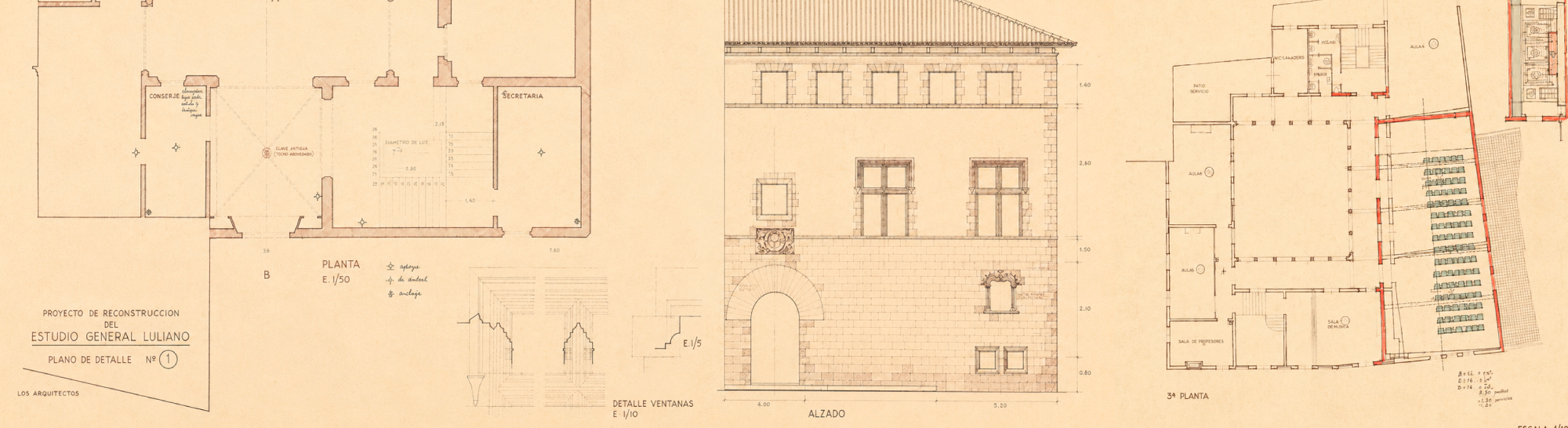
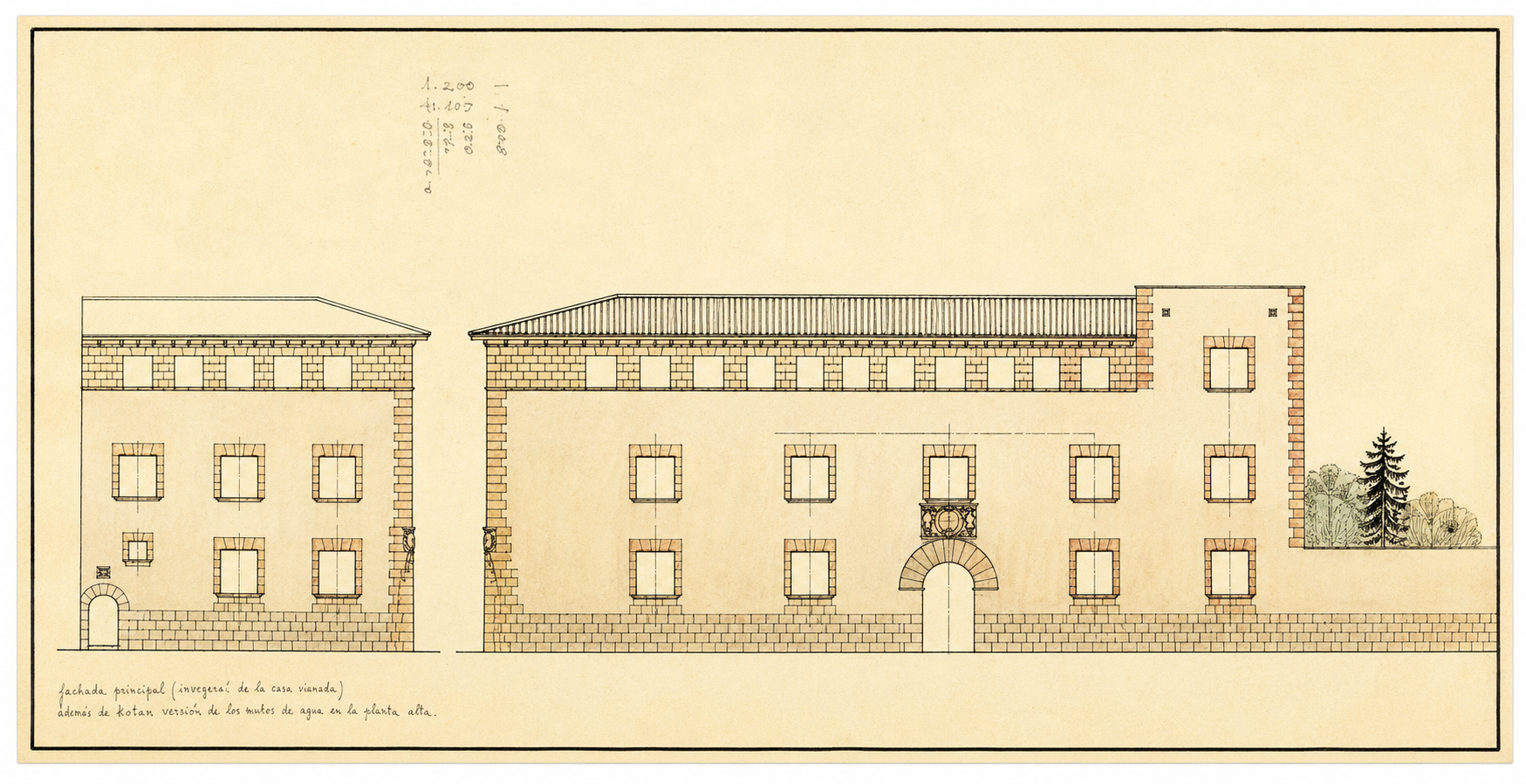
The architect Gabriel Alomar, a member of the board, was commissioned to draw up the plans for the new building. Work began on 3 July 1950 but was halted in 1953 for lack of funds. In 1963, with support from the Fundación March, work resumed and the building was left all but finished. Only the assembly hall remained: begun in 1966, it was completed in 1972 owing to the Roman remains found beneath it.
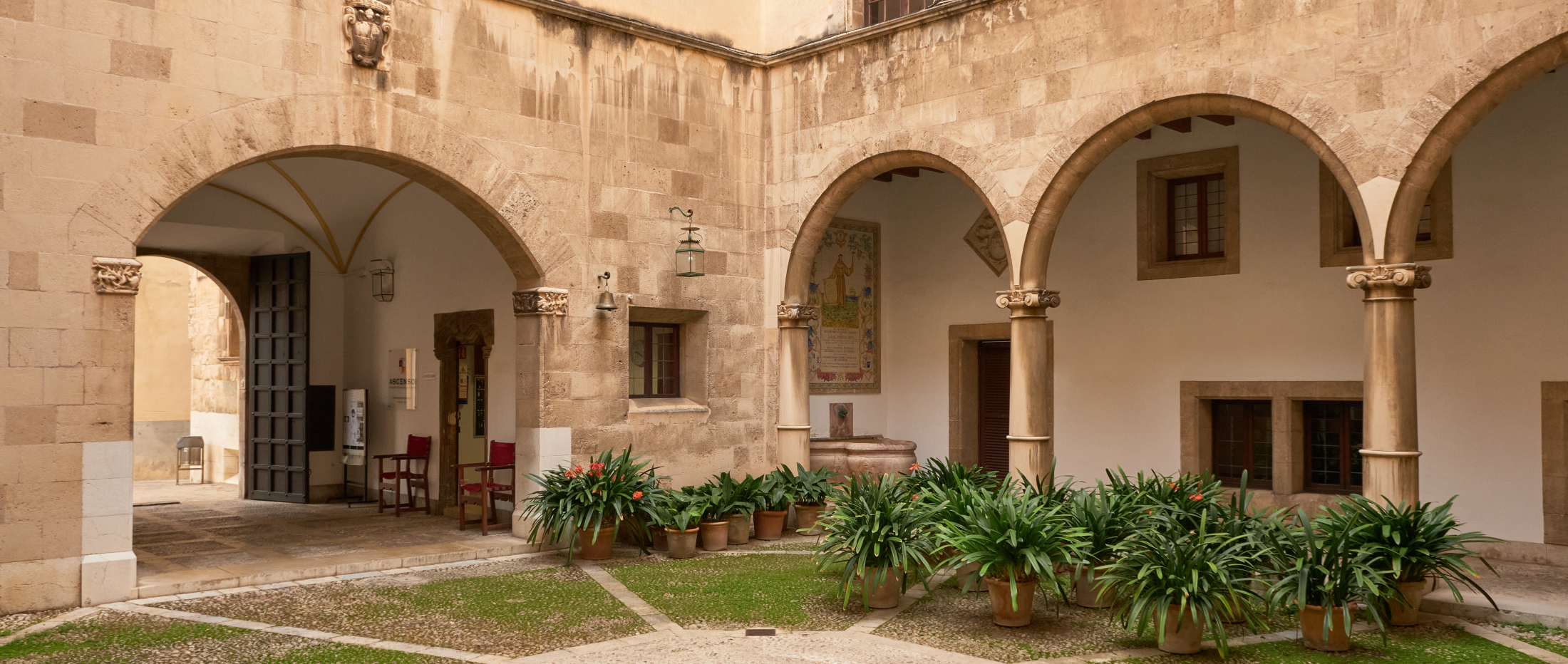
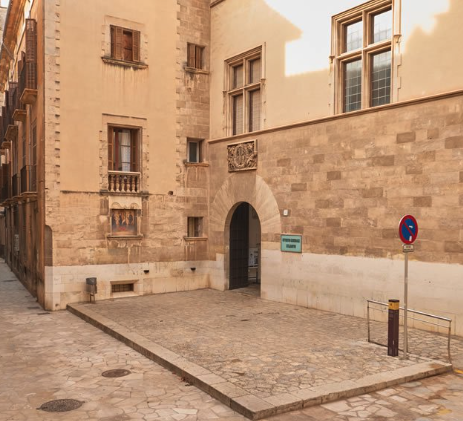
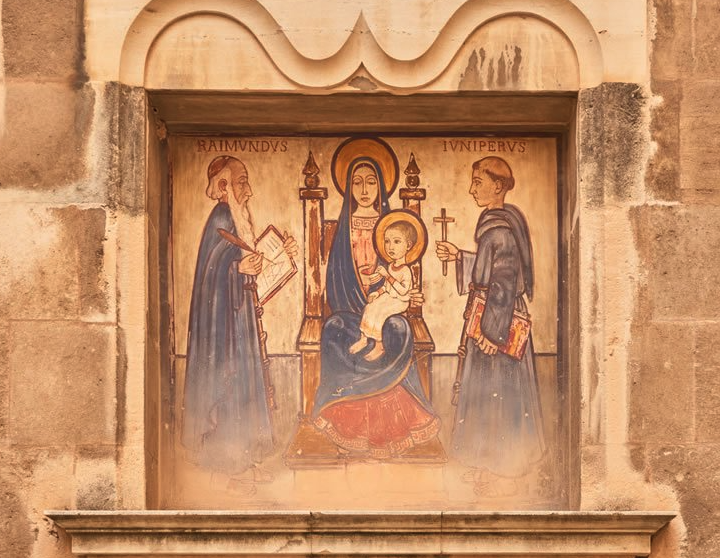
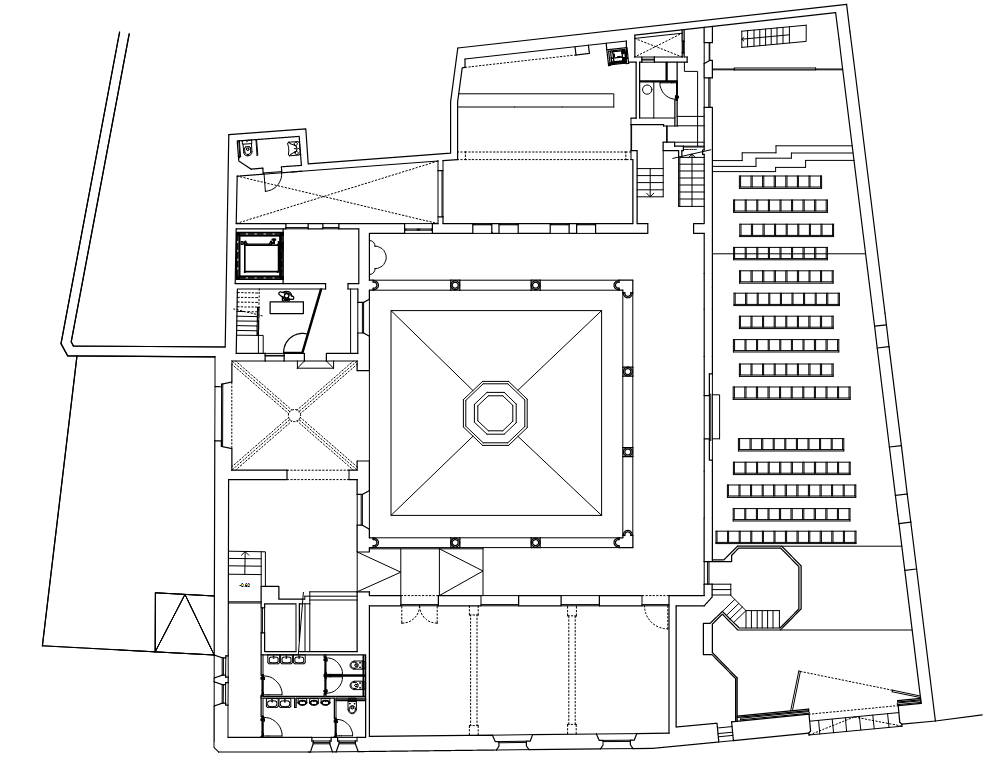
The present building is Regionalist in style and set back from the street, creating a small square before the main facade. The facade is austere, with a round-arched entrance portal, mullioned windows and a projecting timber eave. The building comprises a ground floor, a piano nobile, a converted loft and four mezzanines. It is arranged around a clastra with a perimeter portico, Ionic columns and round arches, and is distinguished by the central floor mosaic bearing Ramon Llull's coat of arms. The side facade, flush with the street, includes a portal with a segmental arch giving access to the auditorium. Various heraldic elements and other pieces from the original building were also incorporated.

.png)